

A beautiful beginning
Your cart is empty
Begin with one of our most-loved collections and find a piece made for you.
Shop best sellers- Made to order in Surat
- Insured international delivery
- Secure Shopify checkout
Added:
Cart Error
Drawer menu
Your cart (0)
Begin with one of our most-loved collections and find a piece made for you.
Shop best sellers
THE JOURNEY OF A LAB-GROWN DIAMOND
A diamond seed. Carbon transformed. Brilliance revealed. Then a piece made for one person: you. Follow the CVD journey from the growth chamber to our Surat workshop.
This is an educational journey. The exact growth method, treatment disclosure, grading-report scope and materials for your stone are stated on its product page or in your approved custom specification.
FIRST, THE FACT THAT MATTERS
A laboratory-grown diamond has essentially the same chemical composition, crystal structure, optical properties and physical properties as a natural diamond. The difference is how and where the crystal formed: through a controlled technological process rather than a geological one.
It is not cubic zirconia and it is not moissanite. Those are different materials. A lab-grown diamond is diamond.
The journey below shows how a CVD lab-grown diamond moves from a diamond seed and carbon-containing gas to a rough crystal, a polished stone and finally made-to-order jewelry.
Compare lab-grown and natural diamonds →THE COMPLETE JOURNEY
The early stages belong to specialist diamond technology and cutting. Signora's work begins with selecting the right documented stone for the design, then crafting the jewelry around it. Keeping those roles clear is part of keeping the story honest.

01 · FOUNDATION
CVD growth begins with a thin plate of diamond crystal. This seed provides the ordered lattice on which new diamond material can form. It is the foundation of the crystal—not a lookalike stone and not the finished gem.
02 · CVD GROWTH
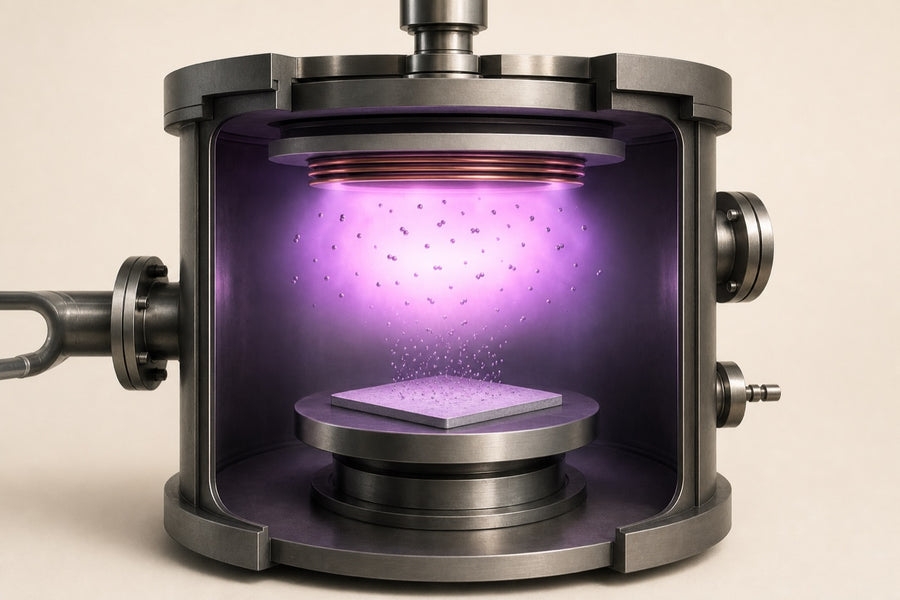
The seed is placed in a low-pressure growth chamber. Hydrogen and a carbon-containing gas, commonly methane, are introduced. Microwave energy activates the gas into a plasma, creating the conditions for carbon to deposit on the seed as diamond.

03 · ROUGH CRYSTAL
Carbon builds onto the seed over time, extending the diamond lattice and forming a rough crystal. At this point it is real diamond, but it has not yet been planned, shaped or polished for jewelry.

04 · PLANNING & CUTTING
The rough is inspected and mapped before cutting. Its orientation, proportions and intended shape are planned to balance beauty, structural integrity and yield. Precision shaping, faceting and polishing then turn the rough crystal into a finished diamond.

05 · INDEPENDENT DOCUMENTATION
An independent grading report records the characteristics and exact scope of the stone or jewelry item it covers. Depending on the report type, this can include origin, shape and cutting style, measurements, carat weight, color, clarity, cut-related grades, growth method and treatment comments.
06 · SIGNORA CRAFT
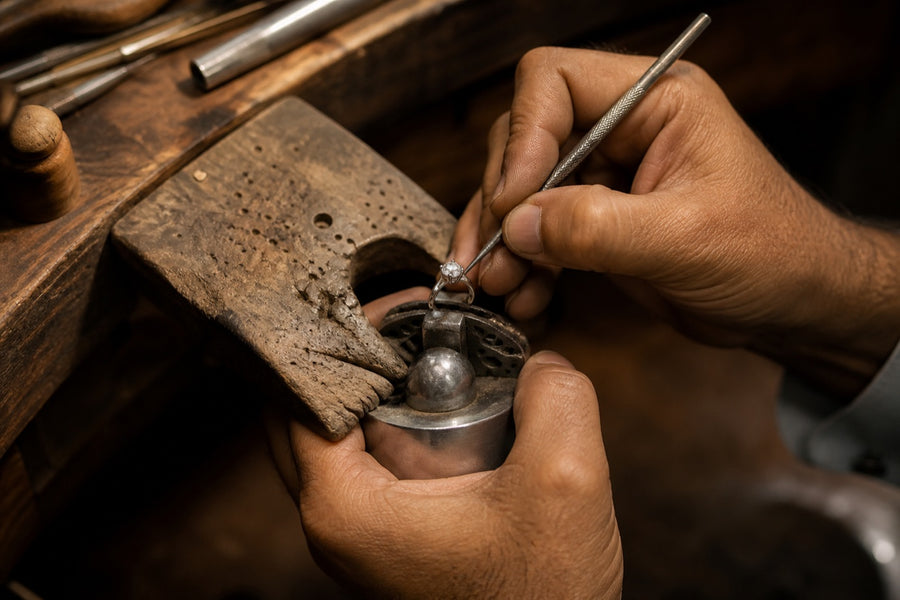
Once the stone and design are confirmed, our Surat workshop creates the setting in the selected solid precious metal, secures the stones, hand-finishes the surfaces and inspects the completed piece before dispatch. The science creates the diamond. The craft gives it a life on the hand.
WHO DOES WHAT
A transparent diamond story names each role clearly. The crystal is grown using specialist technology, the included IGI report—or any other stated report—is issued by an independent laboratory, and Signora turns the selected stone into made-to-order jewelry in Surat.
CVD technology creates the rough diamond crystal from a diamond seed and carbon-containing gas.
The laboratory records only the stone or finished item and scope named on the exact report.
We match the selected stone to the approved design, prepare the setting, secure the stones, finish the piece and inspect it before dispatch.
THE SCIENCE, SIMPLIFIED
A CVD reactor combines a diamond seed, low pressure, hydrogen, a carbon-containing gas and energy that activates a plasma. Carbon species reach the seed and add to its crystal structure, producing new diamond material.
A diamond seed, hydrogen and a carbon-containing gas.
Microwave energy activates a plasma, and carbon is deposited onto the seed under controlled conditions.
A rough lab-grown diamond crystal that still requires planning, cutting and polishing.
This diagram explains the typical CVD route. The exact producer, growth conditions, timing and any post-growth treatment vary by stone and are not universal product specifications.
THE CUTTER'S DECISIONS
Two diamonds of equal carat can face up very differently. Proportion, symmetry, polish and facet arrangement influence how light travels through the finished stone. That is why a diamond cannot be judged by carat alone.
Understand the 4Cs and diamond quality →
WHAT COMES IN WRITING
An IGI report included under the 0.50 ct rule—or other documentation stated for the product or order—and the Signora Jewelry Certificate are not interchangeable. Each records a different part of what you are buying.
An included grading report records the laboratory's findings and the exact scope stated on that document. A grading report describes quality and identity; it is not a price appraisal.
Each approved individual lab-grown center or primary diamond of 0.50 ct or more includes an independent IGI grading report. For diamonds below 0.50 ct and other stones, independent documentation is included only when the product page or approved custom-order specification states the laboratory, report type and scope.
Included with every finished piece. It records the finished jewelry, selected materials and stated metal purity.
THE FINAL TRANSFORMATION IS HUMAN
Once the design, stone, metal, size and personal details are confirmed, the work moves to the bench. Each step is guided by the approved product selection or custom specification.
Stone, metal, size, setting, engraving and any custom details are checked before production.
The solid-metal setting and its components are prepared according to the approved design.
Stones are secured, surfaces are refined and the piece is hand-finished for its intended look and wear.
The completed piece, finish, settings and included documentation are checked before packing and dispatch.
The science gives the diamond its crystal. Craft gives the piece its character.
CLARITY BEYOND THE SPARKLE
ASSUMPTION
FACT
A lab-grown diamond is diamond. Cubic zirconia and moissanite are different materials.
ASSUMPTION
FACT
They vary in carat, color, clarity, cut, proportions, growth features and treatment history, just as individual natural diamonds vary.
ASSUMPTION
FACT
Each approved individual lab-grown center or primary diamond of 0.50 ct or more includes its own IGI grading report. Accent diamonds, diamonds below 0.50 ct and other stones do not automatically receive individual reports; documentation for them is included only where stated in the product page or approved specification.
ASSUMPTION
FACT
CVD identifies the growth method. Total environmental performance depends on energy, production, cutting, setting, transport and other product-specific factors.
QUESTIONS, ANSWERED
CVD stands for Chemical Vapor Deposition. It is a low-pressure growth process in which a carbon-containing gas is activated into plasma and diamond material deposits onto a diamond seed.
Yes. It is diamond with essentially the same chemical composition, crystal structure, optical properties and physical properties as a natural diamond. Its origin is laboratory growth rather than geological formation.
No. Cubic zirconia and moissanite are different materials. A lab-grown diamond is crystallized carbon.
Do not assume one growth method for every stone. The product page, loose-diamond record or approved custom specification is the source of truth for the selected stone, and an applicable independent report states the growth method.
Yes. Some CVD-grown diamonds receive post-growth treatment, often to refine color. When an independent report applies, read its treatment comments for the exact stone.
Each approved individual lab-grown center or primary diamond of 0.50 ct or more includes an independent IGI grading report. For diamonds below 0.50 ct, accent stones and other stones, independent documentation is included only when the product page or approved specification states the laboratory, report type and scope.
Not automatically. A girdle inscription should be treated as included only when the exact report confirms it. Ask Signora if the setting makes a stated inscription difficult to view.
Every finished piece includes a Signora Jewelry Certificate recording the finished piece, selected materials and stated metal purity. Applicable independent stone documentation is supplied separately according to the exact product or custom specification.
Signora pieces are made to order and hand-finished in our workshop in Surat, India.
Yes. Explore the Diamond Vault or begin a custom design. The selected stone and setting are confirmed before production.
Finished pieces are gathered on the lab-grown diamond jewelry page. Each design there is made to order and hand-finished in our workshop in Surat.
YOUR JOURNEY STARTS HERE
Begin with a loose stone whose product record states its documentation, a made-to-order design or an idea that exists only in your mind. We will help you take it from specification to finished piece.
Book a free consultation →No payment to begin a custom brief · You approve the design before crafting · Insured delivery
This page explains the typical CVD growth route for consumer education. Product-specific details—including growth method, treatments, grading-report scope, inscription and materials—are controlled by the exact product page, loose-diamond record, laboratory report or approved custom specification.
